"Performance Beyond Expectation"
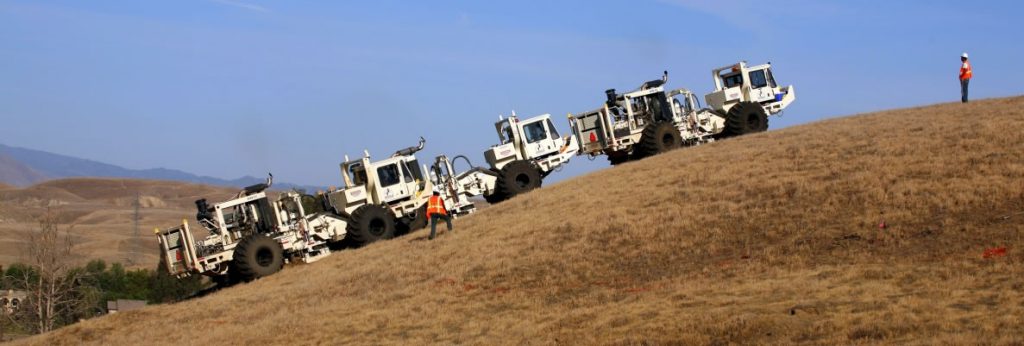
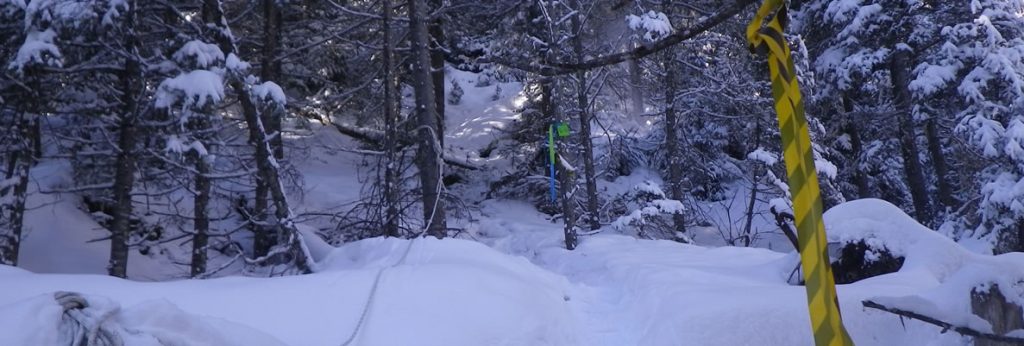
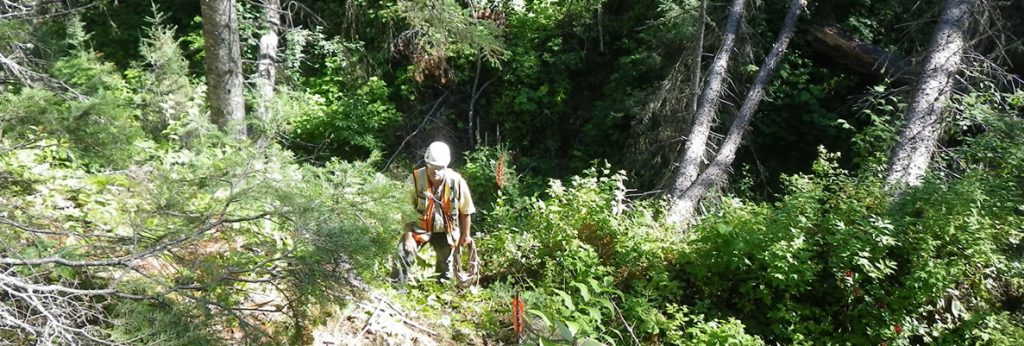
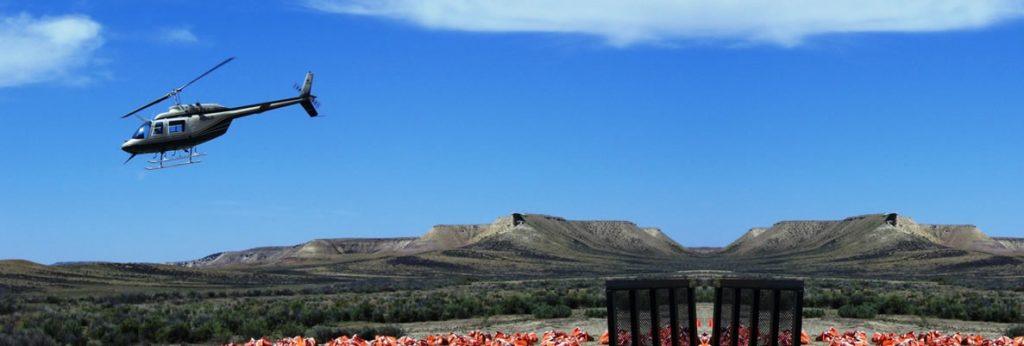
Terra-Sine Resources Ltd. , established in June 2002, is a Geophysical Land and Field Services company, offering comprehensive geophysical services that encompasses all aspects of seismic data acquisition from program inception to completion.
In the beginning of the beginning, the exploding hot universe was full of elementary particles, but the particles had no mass. The universe also contained force fields, and one of those fields, the Higgs, cooled and condensed into a quantum liquid. The liquid dragged on the other particles, giving them mass. The liquid rippled, and the ripples formed a new particle, called the Higgs.
It reads like a just-so story. But it’s the basis of the Standard Model of physics. And so far, physicists have found every particle the Standard Model has predicted but one: the Higgs itself. Researchers at the Large Hadron Collider in Switzerland have been looking for the Higgs for more than a year, and by next winter they will either have found it or they’ll know they won’t. “It’s not obvious,” says Andrei Gritsan, a Johns Hopkins University physicist working at the LHC, “which scenario would be more interesting.”
Physicists at the LHC look for Higgs particles by smashing other particles into each other so hard that something like a Higgs will appear out of the energy of the collision, leaving its signature in a detector. Previous experiments have suggested that the Higgs does not “live” at energies between 0 and 114 gigaelectron-volts, and physicists have now determined that 145 GeV is the uppermost limit, so they are running out of places to look.
The well is being drilled to a total depth of 980 metres and will test the Sawtooth Formation, which is a productive oil reservoir in the Chin Coulee area. The well is located on a surface landscape anomaly identified from satellite imaging and from seismic data, indicating an eroded Mississippian high. With the drilling of this well, PetroWorth will earn a 50% working interest in the Pine Petroleum property.
PetroWorth also announced that in partnership with Pine Petroleum and Gravitas Resources, it has successfully bid on two sections of land contiguous to the property on which the current exploration well is being drilled. As a result, PetroWorth has a 50% working interest in these additional lands, with Pine Petroleum and Gravitas Resources each having a 25% working interest.
PetroWorth Resources Inc. is a junior oil and gas exploration company with properties in Alberta and Eastern Canada. The strategy of the company is to conduct aggressive exploration drilling programs on these permitted properties, both in-house and through advantageous farm-in arrangements.
Read more: http://www.digitaljournal.com/pr/517529#ixzz1kbK612mv
Shell and HP have teamed up to develop a sensing technology that allows them to record seismic data at a much higher sensitivity and at ultra-low frequencies. The system can be used to gain a more accurate understanding of the make-up of the rocks below the Earth’s surface and therefore find more oil and gas to meet rising energy demands.
Seismic imaging involves directing an intense sound source into the ground to evaluate the conditions under the surface. Receivers called geophones (essentially microphones) pick up the echoes that are reflected back. From the data received, this echo can be converted into images of the geologic structure.
HOUSTON, Jan 5, 2012 (GlobeNewswire via COMTEX) — Global Geophysical Services, Inc. /quotes/zigman/428913/quotes/nls/ggs GGS -2.08% today announced that it has completed its previously announced acquisition of Sensor Geophysical Ltd. (“Sensor”).
The combination of GGS’ extensive multi-component acquisition capabilities with Sensor’s unique multi-component processing toolkit will create one of the industry’s most advanced converted wave imaging providers. Sensor is one of the only independent 3C and 4C processing providers with their own proprietary software for advanced multi-component imaging. GGS maintains one of the largest 3C recording system channel counts in geophysical services, and is developing its own next generation autonomous Autoseis(TM) nodal 3C and 4C systems.
Terra-Sine Resources Ltd. announces successful completion of 3 large 3D projects in Montana and North Dakota, USA. We will have crews available in North Dakota and Montana in the second quarter of 2012.
Terra-Sine Resources Ltd. is proud to annouce that our Dun & Bradstreet credit rating has increased from a “BB2″ to “3A2″. For more information please click here to be redirected to the Dun & Bradstreet website.
To help coax these valuable resources out from below the earth’s surface, it may be effective to apply microbiological technologies while the field still has good operating infrastructure. With one technology in particular developed by Glori, oil is being recovered without the need to drill a single well.
Glori partners with oil producers to increase oil production using AERO (activated environment for recovery of oil) technology and it appears the Canadian market is a prime candidate for the effective use of the technology.
The AERO system stimulates indigenous reservoir microbes by introducing nutrients and optimizing the water quality in an oil well’s existing waterflood system. These microbes, already living in the reservoir, thrive and grow off the AERO treatment and begin to exhibit a number of important mechanisms for oil recovery, the company says.
In another initiative to increase demand and reap the rewards of low natural gas prices, operators are turning to gas to power their drilling activities
Natural gas prices remain below C$4 per thousand cubic feet. Crude oil is hanging in around the US$80 pera barrel mark. And diesel fuel remains around US$4 pera gallon. Natural gas demand remains weak in North America as the United States struggles to avoid a double-dip recession, suggesting that gas prices will stay right where they are for at least the next few years. And most of us fully expect crude oil to climb off the price mat sooner rather than later—after all, plus-$100-plus oil is only a hurricane or a Middle East uprising away.
Not too many gas producers like those realities; fuel- switchable industrial consumers love those realities. And now the North American drilling industry is looking more seriously at weaning itself from diesel-electric rotary rigs—the staple of oilfields around the world for the past 60 years or more—in favour of punching holes (for oil, of course, hardly anyone is actually looking for dry gas these days) using cheaper, cleaner and quieter natural gas.
SALISBURY, NB, Nov. 24, 2011/ Troy Media/ – New Brunswick is on the cusp of a development that could revive the economy of this hard-luck province. But some residents have been slow to warm to the idea.
New Brunswick is sitting on a potential pot of gold – shale gas. The province’s government estimates a “major find” of natural gas could net the province more than $200 million in annual royalties, an enticing prospect for a province saddled with a $9-billion debt. To legislators, the shale gas industry is viewed as a potential source of development, investment and royalties.
There will be no moratorium
But citizens are nervous. In early September, more than 20 New Brunswick community groups joined together in calling for “an end to shale gas development plans in the province.” The alliance argues shale gas exploration threatens “public health, the environment, the economy, and the fundamental way of life for New Brunswickers.”
“We ask that our government do its job in protecting our life-sustaining resources against an industry that is plagued by impacts to water, air, and health,” stated Patricia Léger, of Memramcook Action, one of the groups included in the anti-shale gas alliance.
December 2, 2011
The tough economy has taken its toll on most states, putting budgets deep in the red and putting people out of work.
But North Dakota has a low 3.5 percent unemployment rate and a state budget with a billion dollar surplus. That’s because of a major oil boom in the western part of the state, a discovery of at least 2 billion barrels to be gained by fracking — the controversial process of injecting fluid deep into underground rock formations to force the oil out.
The find could be the largest ever in the lower 48 states. It’s expected to make North Dakota the third largest producer of oil after Alaska and Texas. But many residents of the oil boom region are not singing “Happy Days Are Here Again” — they’re saying “enough.”
The Population Doubles
Imagine you live in a small rural town worried for years about depopulation, and suddenly, overnight, the population doubles, and the newcomers are thousands of young men without families. Imagine that you live in a tiny town with one main street that doubles as a state highway.
That’s the situation in New Town, N.D., population 1,500 — at least, it was a couple of years ago. Today it’s anybody’s guess how many people live here, and no one knows how many 18-wheelers roll through every day, either. They just know it never stops.
It seems that nearly every big tank truck in America is on the road here, making tens of thousands of trips a day hauling water, fracking fluid, wastewater and crude oil — and tearing up the roads.
“What we have now is the complete industrialization of western North Dakota. To expect a county of 20,000 people to overnight absorb another 20,000 people is ludicrous,” says Dan Kalil, chairman of the Williams County Commission. I met Kalil in Williston, N.D., at the very eye of this hydrocarbon hurricane.
“They’re consuming all of our resources,” he says. “They’re consuming all of our people looking for jobs. All the employee base is used up. Our roads system is being used up. All our water is being used up. All our sewage systems are being used up. [They're] overwhelmed. All of our leadership time as local public officials is consumed with this.”
© 2012 Terra-Sine Resources Ltd.
All Rights Reserved